Perimenopause Night Sweats but No Hot Flashes: Why
Night sweats can be your only perimenopause symptom. Why it happens, how it differs from hot flashes, other causes, and when to see a doctor.
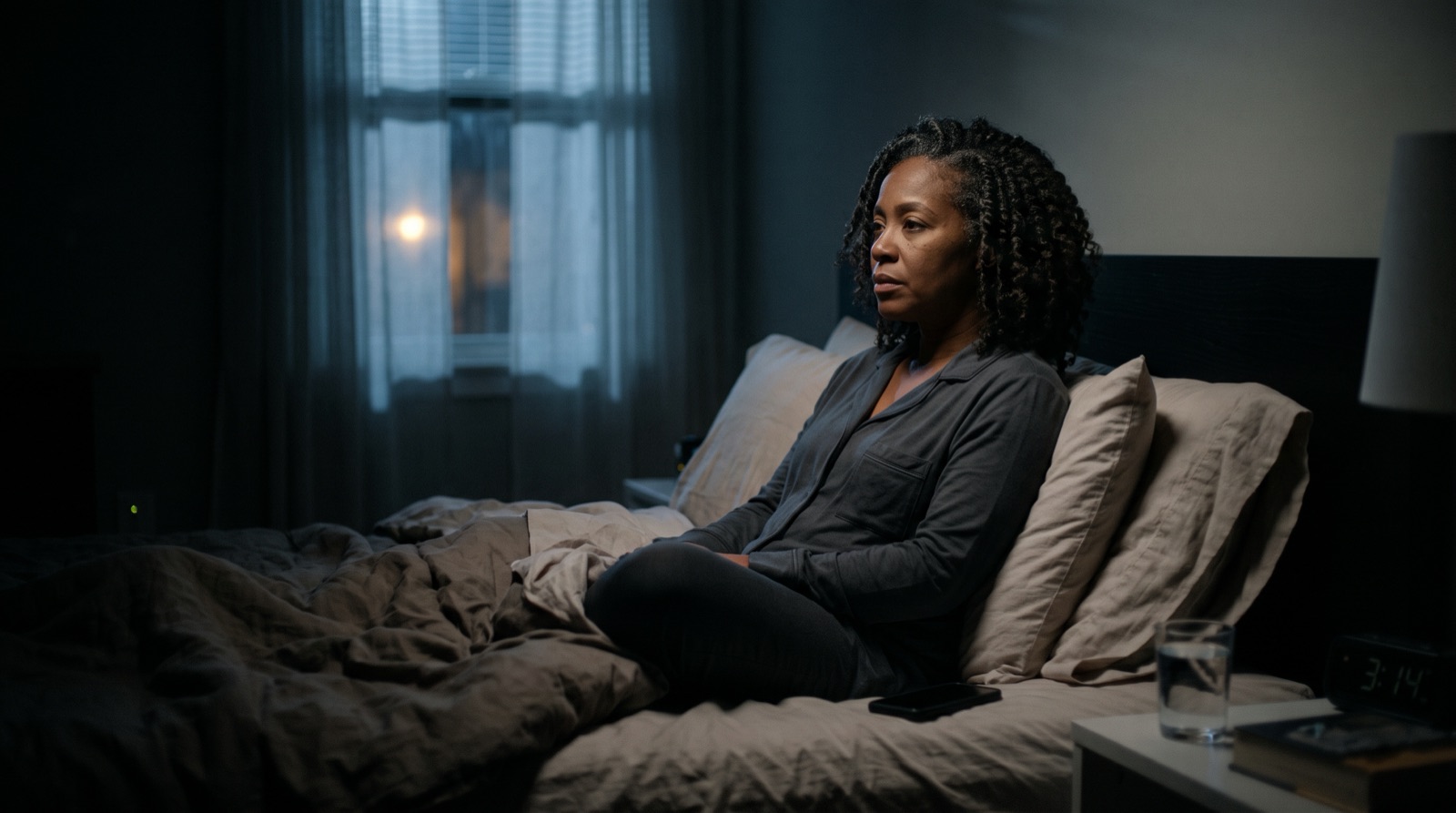
This article explains the mechanism, how to tell isolated night sweats from hot-flash-driven ones, and exactly when to see a doctor.
Key takeaways
- Night sweats can be the only perimenopause symptom you get, because the nighttime sweat threshold differs from the one that triggers daytime hot flashes.
- Erratic estrogen swings and an earlier, steeper drop in progesterone drive night sweats, and progesterone's decline also fragments sleep, making you more aware of temperature shifts.
- Isolated night sweats differ from hot flashes that happen at night in onset, spread, and daytime echoes, and logging that pattern helps you avoid being dismissed at appointments.
- Thyroid disease, medications, infections, low overnight blood sugar, reflux, and alcohol can all cause night sweats, so persistent symptoms deserve evaluation.
- Night sweats with unexplained weight loss, persistent fever, a new lump, or abnormal bleeding need prompt medical assessment, not lifestyle tweaks.
Why can night sweats occur without hot flashes during perimenopause?
Because they are two expressions of the same underlying instability, not a package deal. Hot flashes and night sweats both stem from a narrowing thermostat range in the hypothalamus, driven by fluctuating estrogen. But the threshold that triggers a sweat response during sleep is different from the one that triggers a waking, visible flash. Your body can cross the nighttime threshold while you sleep, drench the sheets, and never wake you enough to register a daytime-style episode.
Night sweats and hot flashes share a trigger, not a schedule
Estrogen drops and spikes erratically during perimenopause, and sleep is when temperature regulation is least defended. That is why night sweats can arrive years before, or entirely without, daytime hot flashes. The US Office on Women's Health describes night sweats as hot flashes that happen during sleep, so if they only strike at night, waking soaked may be the only sign you notice. If your only symptom is waking soaked at 3 a.m. while your days feel normal, that pattern is still consistent with hormonal change, and worth tracking rather than dismissing.
What hormones drive night sweats when hot flashes are absent?
Two hormones explain most of it: estrogen and progesterone. The key detail is that perimenopause is a phase of erratic swings, not a steady slide, and night sweats can show up long before daytime flushing does. For a plain-language overview of how these hormones behave in perimenopause, see how Kyha explains your hormones.
Estrogen swings, not just estrogen decline
Estrogen doesn't fall in a neat line during perimenopause. It surges and crashes unpredictably, sometimes higher than it was in your thirties, sometimes much lower. Those crashes are what disturb your body's temperature regulation. Because the drops happen on their own schedule, you can get the nighttime version (waking soaked) without the daytime version (the flush you picture when someone says hot flashes).
Why falling progesterone matters for sleep and temperature
Progesterone declines earlier and more steeply than estrogen in perimenopause. It has a calming, sleep-supporting effect, so as it drops, sleep gets lighter and more fragmented. Lighter sleep makes you more aware of small temperature shifts, so the same hormonal wobble that a deeper sleeper might sleep through becomes a 3 a.m. wake-up drenched.
Tracking which nights you sweat, where you are in your cycle, and how you slept makes these patterns visible. That is exactly what we built Kyha to do, and how we handle that data is spelled out in our Privacy Notice.
How do perimenopause night sweats differ from hot flashes that happen at night?
The comparison framework: isolated vs hot-flash-driven night sweats
Both come from the same mechanism: falling estrogen makes the hypothalamus, your body's thermostat, overreact to small temperature shifts, triggering vasodilation and sweating (see research on estrogen and hypothalamic thermoregulation). What differs is the pattern around the episode, and that pattern is what you want to capture before an appointment.
| Feature | Isolated night sweats | Hot flashes that happen at night |
|---|---|---|
| Onset | Gradual warmth, often after falling asleep | Sudden surge, often waking you mid-episode |
| Spread | Whole-body sweat, sometimes drenching | Heat rising to face, neck, chest first |
| Daytime echoes | Rare; you may feel fine all day | Daytime flashes, palpitations, or flushed skin |
| What it suggests | Hormone-related but possibly a different symptom cluster | Classic vasomotor symptoms |
What each pattern usually looks like
If you wake soaked but never flush during the day, log the timing, how drenched you are, and whether alcohol, stress, or a warm bedroom preceded it. If you also get daytime surges, note those separately. Two distinct entries tell a provider more than one vague "night sweats" complaint. Kyha is built for exactly this split, though it won't diagnose anything for you.
What other perimenopause symptoms often accompany night sweats without hot flashes?
Symptoms that cluster with night sweats in perimenopause
Night sweats rarely show up alone. The most common companions are sleep disruption, brain fog, mood changes, irritability, migraines, heart palpitations, joint aches, and changes in your cycle, including heavier or closer-together periods. Vaginal dryness, low libido, and itchy skin can appear too, though they often arrive later.
Why 'weird symptoms' that don't add up often do
If you've been collecting a list of seemingly unrelated problems, here's why they may be connected. Estrogen doesn't just control your cycle; it interacts with the temperature-regulation centers in your brain, the neurotransmitters that govern sleep and mood, and tissue throughout your body. So when estrogen starts swinging unevenly in your late 30s or 40s, the effects scatter: night sweats here, a three-day migraine there, a shorter fuse, a word you can't remember, a period that shows up early and heavier than usual. Each symptom looks trivial or unrelated on its own, which is exactly why appointments focused on one complaint at a time end with reassurance instead of answers. Written down together, dated over months, the same symptoms form a pattern that points somewhere specific, and that pattern is what turns "weird stuff" into evidence you can act on.
When should night sweats without hot flashes prompt a doctor visit?
If night sweats keep showing up for more than a few weeks and they disrupt your sleep, that alone is reason enough to book an appointment. Falling progesterone during perimenopause affects both sleep quality and body temperature regulation, which is why soaked sheets can show up years before any daytime symptoms (StatPearls: Menopause). You do not need a hot flash to justify the visit.
Red flags that mean don't wait
Night sweats with unexplained weight loss, a persistent fever, a new lump, or bleeding between periods or after sex need prompt evaluation, not lifestyle tweaks. So does any symptom that is getting worse fast. These can signal conditions that have nothing to do with hormones.
What to bring to the appointment so you're not dismissed
Bring a written symptom log: dates, how often you wake soaked, cycle changes, sleep quality, and anything else odd you've noticed. Ask directly whether your pattern fits perimenopause and what the treatment options are. If the answer is "your labs are normal," ask what the plan is for the symptoms themselves, because normal bloodwork does not rule out perimenopause.
What conditions besides perimenopause cause night sweats without hot flashes?
Thyroid, infection, medication, and other causes to rule out
An overactive thyroid (hyperthyroidism) can cause night sweats, a racing heart, anxiety, and sleep trouble, which overlaps enough with perimenopause that it gets missed. A simple TSH blood test rules it in or out.
Infections like tuberculosis are a classic cause of drenching night sweats, usually alongside fever or weight loss. Less dramatically, a low-grade chronic infection can also do it.
Medications are a common culprit: antidepressants, some diabetes drugs, and certain steroids and hormone treatments list night sweats as a side effect. Check the leaflet on anything you started recently.
Other causes worth ruling out include low blood sugar at night, acid reflux, alcohol before bed, and, less commonly, lymphoma, which typically comes with swollen lymph nodes and unexplained weight loss.
If your night sweats come with weight loss, fever, or night-time drenching that soaks bedding, ask for labs rather than waiting.
Which lifestyle changes reduce night sweats when hot flashes aren't present?
Lifestyle changes won't fix the hormone swings underneath, but they can lower how often you wake up soaked while you work out what's driving them. Start with the two levers with the clearest evidence behind them: your sleep environment and what you consume in the hours before bed.
Sleep environment and timing
Keep the bedroom cool (most people sleep best around 65°F) and use breathable, moisture-wicking bedding so a night sweat dries fast instead of waking you twice. A fan, an open window, or layered bedding you can kick off matters more than any gadget. If your sweats cluster in the first half of the night, shifting bedtime earlier by even 30 minutes can help, because sleep gets lighter as morning approaches.
Alcohol, caffeine, and blood sugar
Alcohol is the biggest trigger for many women: it dilates blood vessels and fragments sleep, so even one drink can turn into a 2 a.m. sweat. Caffeine after mid-afternoon does something similar through a longer route. If your sweats follow sugary dinners or skipped meals, unstable overnight blood sugar may be involved. If lifestyle changes alone don't help after a couple of months, that pattern is worth a medical conversation, since night sweats also have non-hormonal causes (see the National Institute on Aging on menopause).
How do you track night sweats and other symptoms to get real answers?
What to log and why patterns beat single data points
One sweaty night proves nothing to a provider; three months of sweaty nights with a pattern does. Log the date, how drenched you were (light, moderate, soaked sheets), whether you woke cold or stayed hot, and what happened that day: alcohol, late meals, stress, cycle day. Add the other weird stuff as it shows up, brain fog, migraines, heart palpitations, mood shifts, sleep quality. Patterns beat single data points because they separate hormone-related night sweats from one-off triggers, and they give you something concrete to walk into an appointment with when you're worried about being dismissed.
How Kyha fits, and where it falls short
Kyha is built for exactly this: log symptoms in under a minute, and it surfaces patterns over time so you can see whether night sweats cluster around certain cycle days or track with other symptoms. It's private by design, made for midlife women's health, and turns your logs into a health report you can bring to appointments.
Where it falls short: Kyha doesn't diagnose, and it doesn't replace labs or a clinician. What it does is help you connect the weird stuff into a pattern you can show a provider.
Frequently asked questions
Can you have night sweats in perimenopause even if your periods are still regular?
Yes. Hormonal swings often start before cycles change, and night sweats can be the first visible sign. Progesterone declines earlier and more steeply than estrogen, which disrupts sleep and temperature regulation even while periods continue on schedule. If your cycles are still regular but you wake soaked, that pattern still fits perimenopause and is worth logging.
Do night sweats without hot flashes mean my estrogen is low or high?
Neither, reliably. Perimenopause estrogen swings erratically, sometimes surging above earlier levels, sometimes crashing below them. Night sweats tend to follow the crashes, but a single sweaty night tells you nothing about your hormone levels. What matters is the pattern over weeks: when the sweats happen, how drenched you get, and where you are in your cycle.
How long do perimenopause night sweats usually last?
There is no fixed timeline. Because perimenopause is a phase of erratic fluctuation rather than a steady decline, night sweats can arrive years before other symptoms and come and go unpredictably. Some women have them occasionally for a couple of years, others more persistently. If they continue for more than a few weeks and disrupt sleep, that warrants a medical conversation.
Will a doctor test my hormones to confirm perimenopause night sweats?
Often not, and that is normal. Hormone levels fluctuate so much day to day that a single blood test can look normal even during perimenopause. Diagnosis usually rests on your symptom pattern and age instead. Bring a written log of dates, severity, cycle changes, and sleep quality, and ask what the plan is for symptoms if labs come back normal.
Can night sweats in your 40s be something other than perimenopause?
Yes, which is why persistent night sweats deserve evaluation. An overactive thyroid produces a very similar picture and is ruled out with a simple TSH blood test. Medications, including antidepressants and some diabetes drugs, list night sweats as a side effect. Infections, low overnight blood sugar, reflux, and alcohol before bed can also cause them. Weight loss or fever means prompt assessment.
Sources
- Menopause symptoms and relief, US Office on Women's Health
- Menopausal hot flashes: mechanisms, endocrinology, treatment, Journal of Steroid Biochemistry and Molecular Biology (2014)
- Menopause, StatPearls, NCBI Bookshelf
- What is menopause?, National Institute on Aging
This article is for education, not medical advice. Talk to your doctor about your symptoms and before changing any treatment.