Introducing the Kyha Health Report
Your symptoms, cycle, medications and history in one clear report you can bring to your doctor, so you walk in with evidence, not just a feeling.

Every woman who has sat in a doctor's office trying to explain her symptoms knows how that conversation can go. You list the night sweats, the brain fog, the periods that changed, the anxiety that came out of nowhere. And too often the answer is a version of the same thing: just go on the pill. It's a natural part of aging. Are you sure it's not stress? It has become a running joke among women, and it isn't funny.
We built the Kyha Health Report so you never have to walk into that appointment with only your memory and a feeling.
Why we built it
Symptoms in your late 30s and 40s rarely arrive one at a time. They come and go, they shift with your cycle, and on the day of your appointment you might feel fine. Without a record, it's your word against a fifteen-minute visit.
The Health Report changes that. It shows your symptoms over time, alongside what you're actually worried about and what you've been experiencing, so you walk in with evidence, not just a description.
It's also for women whose doctors don't know much about perimenopause or hormonal changes. A clear, organized report gives them a window into what you're going through, and a starting point for a better conversation.
What's in your report
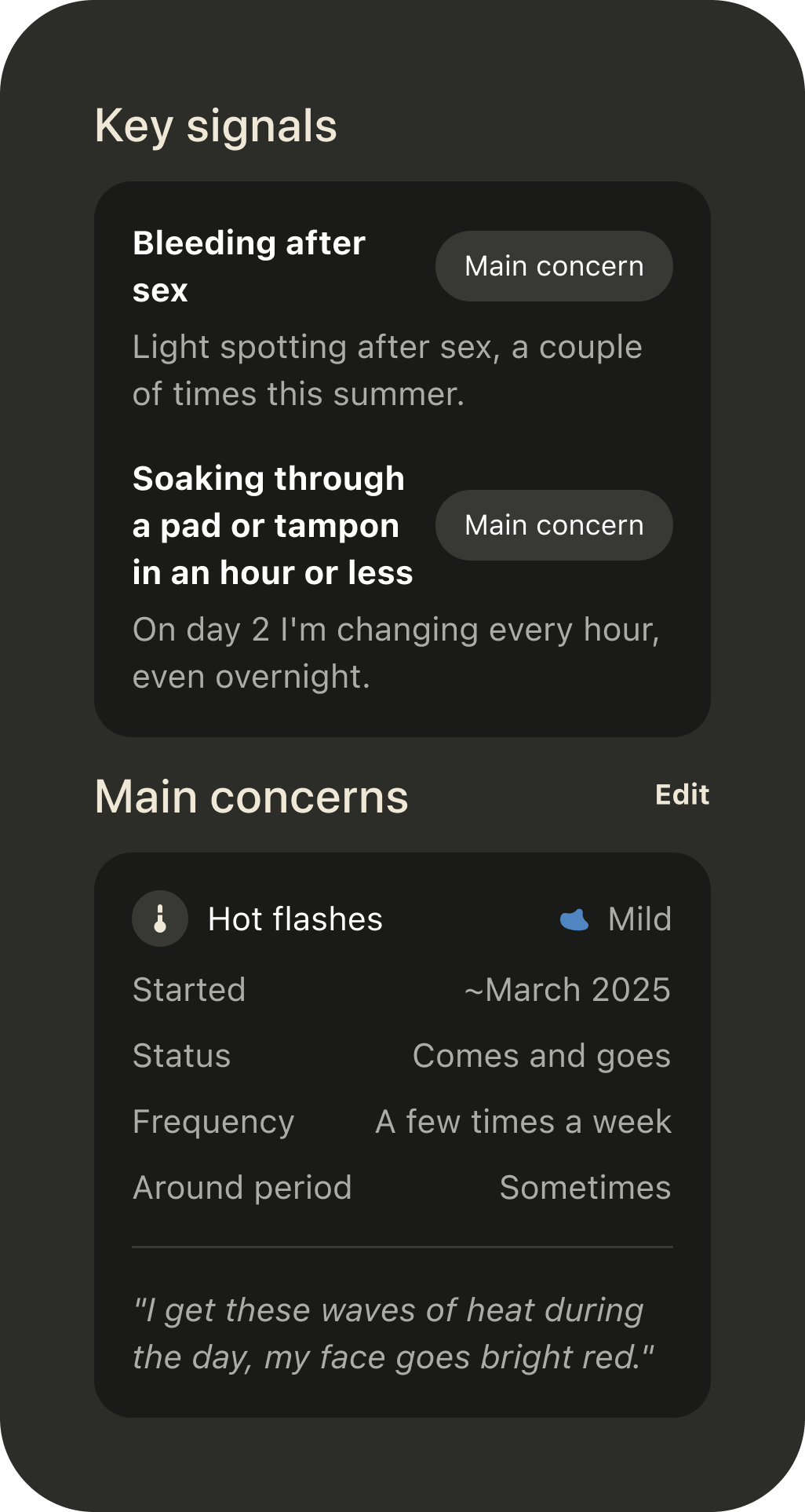
- Key signals: anything that's worth flagging for your clinician up front.
- Main concerns: the things you most want to talk about, in your own words.
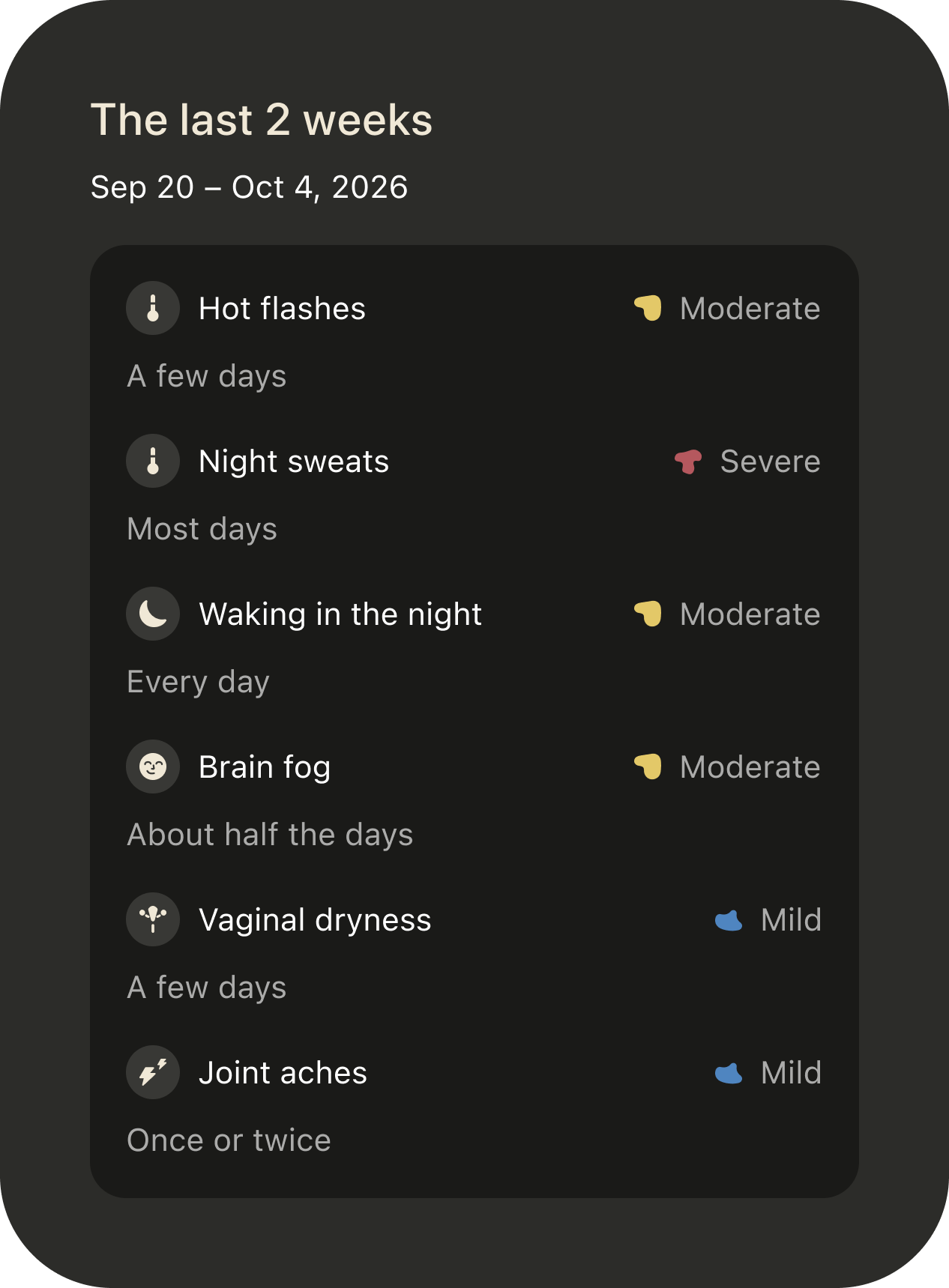
- The last 2 weeks: how often each symptom showed up and how bad it was.
- Cycle: your recent periods and what's changed.
- Medications & supplements: what you take now, and anything you stopped in the past year.
- Health history: conditions and surgeries that matter for the conversation.
- Pregnancy: the questions your clinician will ask anyway, answered ahead of time.
How it works
You build your report in a short, guided conversation with Kyha. Kyha asks about what's going on, what's worrying you most, and the details a clinician will want to know, then puts it all together.
Your report is living: it grows as you log symptoms and periods in the app, so each month's report reflects what's really happening. Past months stay saved, so you can see how things have changed over time.

When you're ready for an appointment, download it as a PDF and bring it with you, or send it ahead. You decide when to download it and who to share it with.
Kyha won't diagnose you, and that's the point
The Health Report doesn't tell you what you have. It gives you, and your doctor, a clear picture to work from, so the conversation starts with what's actually been happening instead of what you can remember in the moment.
How to get it
The Health Report is part of Kyha+, along with weekly insights and unlimited chat with Kyha. Kyha+ is $12.99 a month or $109.99 a year. Cycle tracking and symptom logging are always free.
Download Kyha, start logging, and build your first report before your next appointment.
This article is for education, not medical advice. Talk to your doctor about your symptoms and before changing any treatment.